
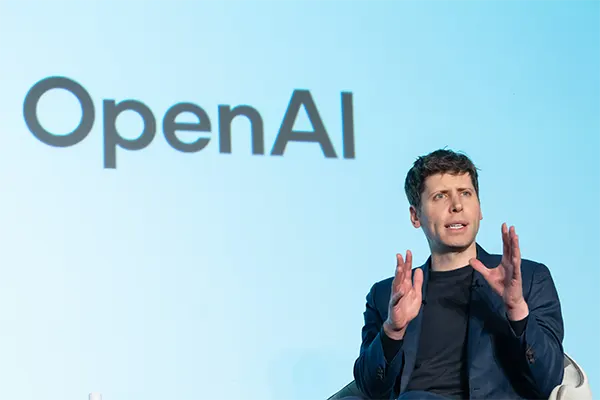
OpenAI: How Sam Altman Bet on Artificial Intelligence and Turned a Research Lab into a Global Leader
When people talk about the AI boom of the 2020s, OpenAI sits at the centre of almost every serious conversation. What makes the story especially notable is that it is not only about technical breakthroughs, but also about strategic decisions: funding, governance, product delivery, and responsibility at scale. Sam Altman’s role is often reduced to a simple narrative of leadership, yet his contribution is more specific. He helped shape OpenAI into an organisation able to finance frontier research, ship products to millions of users, and stay relevant in a highly competitive and regulated environment.
From research ambition to a business that could scale
OpenAI originally launched with the goal of advancing artificial intelligence research and sharing results openly. However, by the late 2010s, large model development started demanding resources beyond what traditional academic funding or standard non-profit donations could sustain. Training modern AI systems requires enormous computing power, specialist infrastructure, and long-term financial planning. That reality forced OpenAI to rethink how a research-driven organisation could survive in a field where progress depends heavily on access to compute.
One of the most important changes was the move toward a structure capable of attracting large-scale investment while still claiming a mission-based direction. This shift allowed OpenAI to secure major long-term support. A key part of that support came through its partnership with Microsoft, which provided both cloud infrastructure and substantial funding commitments. In practice, this partnership solved a major issue for OpenAI: consistent access to the computing resources needed to train and run advanced models at global scale.
By 2024–2025, OpenAI’s business logic was visible through its releases. Rather than shipping only research prototypes, the company focused on systems built for real-time use. The release of GPT-4o in 2024, aimed at supporting text, images, and audio with fast interaction, signalled a clear intention to make AI feel like a natural interface for everyday tasks. This is a different direction from earlier generations, which often required slower, more text-based workflows.
Investor influence, governance pressure, and why structure became headline news
Once OpenAI became commercially significant, its organisational structure became a topic of public debate. Investors wanted clarity on risk and stability, while governments and regulators wanted to understand how a mission-led AI company manages oversight and accountability. By 2025, OpenAI publicly described elements of its governance and board structure more openly, including the presence of independent leadership roles. This reflects a broader trend in frontier AI: the governance model itself becomes part of a company’s credibility.
Governance discussions also connect directly to safety responsibilities. Large AI models can be used in both beneficial and harmful ways. That is why OpenAI began emphasising evaluation work and partnerships aimed at monitoring risks. Publicly known collaborations with research institutions and laboratories illustrate that advanced AI is treated as a dual-use technology, meaning the same capabilities can support productivity while also creating new types of threats if misused.
Ultimately, OpenAI’s structure became a strategic requirement, not a legal formality. The company needed a way to finance very expensive research while staying trusted. Altman’s leadership has involved navigating that tension: protecting the organisation’s ability to move quickly, while demonstrating that oversight exists and safety is treated as operational work rather than a marketing claim.
Product strategy: turning AI into a daily habit for consumers and teams
OpenAI’s success is not explained solely by model quality. Many groups can build strong systems; far fewer can make them accessible and useful at scale. OpenAI’s product approach under Altman pushed AI into daily life through consumer adoption first, then expanded towards enterprise and developer ecosystems. ChatGPT became the entry point, not because it was the first chatbot, but because it made advanced AI feel simple, helpful, and widely relevant.
From there, the company expanded in two directions. The first was capability: models improved in speed, accuracy, and multimodal interaction. The second was distribution: OpenAI made its systems usable not only through a consumer app, but also through APIs that developers and businesses could integrate into tools, services, and internal workflows. That two-track strategy reduced dependence on a single audience and made OpenAI both a consumer brand and a core infrastructure provider for many products.
By 2025, commercial demand for AI tools had become measurable through the growth of paid subscriptions and enterprise adoption. Industry reporting throughout 2024 and 2025 repeatedly highlighted rapid increases in revenue linked to paid tiers and business usage. This suggests OpenAI succeeded in converting mass interest into recurring commercial value, which is essential for funding continued research and deployment.
Why “mass adoption” mattered more than a narrow enterprise play
Altman’s bet was not simply that AI would improve, but that it would become a general interface layer across many industries. This is why OpenAI invested heavily in making ChatGPT broadly appealing, rather than targeting only a narrow professional segment. Education, writing, coding, translation, and personal productivity became mainstream use cases, which helped normalise AI and increase the size of the user base.
Mass adoption also produced a practical advantage: feedback at scale. When millions of people interact with a system daily, real-world usage patterns become visible quickly. This allows faster refinement of both product experience and safety restrictions. In this sense, product design decisions become a form of policy because they shape what users can do, what they cannot do, and how the model responds in sensitive areas.
This approach also changed market dynamics. Instead of competing only through research publications, OpenAI competed through shipping speed, user experience, and reliability. Competitors were forced into faster release cycles because OpenAI had already set expectations: AI assistants should be accessible to ordinary users and useful for real work, not only for demonstrations.
Ethics, safety, and competition: the cost of being first at scale
OpenAI’s rise created scrutiny that most technology companies face only after decades. The more users a system has, the more likely it is to be tested in harmful ways — whether through misinformation, fraud, or risky instructions. This means safety work cannot remain a theoretical research topic. It becomes an operational requirement tied directly to product release cycles, model evaluation, and policy enforcement.
By 2025, OpenAI had made safety and preparedness frameworks more visible as part of how it talks about deployment. This includes formal evaluations before major launches, red-team style testing, and attempts to identify risks linked to misuse. While no framework is perfect, the presence of structured evaluation signals that the organisation treats AI deployment as something that must be managed actively, not simply released and patched later.
At the same time, competition intensified. OpenAI’s commercial momentum pushed other major firms to accelerate their own AI offerings. In fast-moving markets, the pressure to ship can collide with cautious deployment. OpenAI has had to operate in a space where speed matters for relevance, but safety and trust matter for long-term survival and regulatory acceptance.
The long-term bet: trust as a business asset, not a slogan
OpenAI’s long-term position depends heavily on trust. Consumers need confidence that the tool will not mislead them in critical situations. Businesses need assurance that integration will be stable, secure, and compliant. Governments want to understand how risks are monitored. Trust is not created by branding; it is created by consistency — transparency, documented policies, and credible governance mechanisms.
This is why OpenAI’s governance debates matter. Frontier AI can influence education systems, labour markets, software development, media ecosystems, and information integrity. Once a company becomes a central supplier of this capability, it holds real societal power. That means accountability is not optional. It becomes a condition for global expansion, enterprise adoption, and the ability to operate across different regulatory environments.
Sam Altman’s story is therefore not only about betting on AI’s potential. It is about betting that OpenAI could stay trusted while scaling faster than most research-led organisations in modern technology history. By 2025, OpenAI’s public focus on governance, safety evaluation, and structured deployment suggests a recognition of this reality: leadership in AI is measured not only by capability, but by whether society accepts the technology as something it can rely on.