

NVIDIA and Jensen Huang: How a Graphics Card Maker Became the Backbone of Global AI
Over the past three decades, NVIDIA has moved far beyond its origins as a graphics processing company. What began as a niche focus on gaming hardware has evolved into a central role in artificial intelligence, data centres, and high-performance computing. At the centre of this transformation stands Jensen Huang, whose long-term vision reshaped not only the company but also the broader technology landscape. By 2026, NVIDIA is widely recognised as one of the key infrastructure providers powering modern AI systems.
From Gaming GPUs to Parallel Computing Leadership
NVIDIA was founded in 1993 with a clear focus on graphics processing units (GPUs) for gaming and visual computing. In the early 2000s, its products became widely adopted by gamers due to their ability to render complex graphics efficiently. However, the real turning point came when engineers realised that GPUs could handle not only graphics tasks but also highly parallel computations required in scientific and technical fields.
This shift was formalised in 2006 with the introduction of CUDA, NVIDIA’s proprietary parallel computing platform. CUDA allowed developers to use GPUs for general-purpose computing, unlocking new possibilities in areas such as physics simulations, financial modelling, and later machine learning. At that stage, the move was seen as technical diversification, but in hindsight it laid the groundwork for the company’s dominance in AI.
As data volumes increased and algorithms became more complex, traditional CPUs struggled to keep pace. GPUs, with thousands of cores designed for simultaneous operations, offered a practical solution. By the mid-2010s, researchers began to adopt NVIDIA hardware for deep learning tasks, marking the beginning of a new phase in the company’s evolution.
Why GPUs Became Essential for Artificial Intelligence
Artificial intelligence, particularly deep learning, relies heavily on matrix operations and large-scale data processing. These workloads benefit from parallelisation, where thousands of calculations can be executed simultaneously. NVIDIA’s GPUs were uniquely suited to this type of processing, giving the company an early and decisive advantage.
Another critical factor was software support. NVIDIA invested heavily in libraries such as cuDNN, TensorRT, and development frameworks that simplified AI deployment. This ecosystem made it easier for researchers and companies to build and scale machine learning models without needing to design hardware solutions from scratch.
By the early 2020s, most major AI breakthroughs—from image recognition to natural language processing—were trained using NVIDIA hardware. This widespread adoption created a reinforcing cycle: more developers meant better optimisation, which in turn attracted even more users. As a result, NVIDIA became deeply embedded in the global AI infrastructure.
Jensen Huang’s Strategy and Long-Term Vision
Jensen Huang, co-founder and CEO of NVIDIA, has played a central role in guiding the company through multiple technological shifts. Unlike many executives who focus on short-term gains, Huang consistently prioritised long-term positioning. His decision to invest in parallel computing long before it became mainstream is often cited as one of the most significant strategic moves in modern tech history.
Huang also understood the importance of building a complete ecosystem rather than relying solely on hardware sales. Under his leadership, NVIDIA expanded into software, developer tools, and integrated systems. This approach ensured that customers were not just buying chips but adopting an entire computing framework built around NVIDIA technologies.
Another defining aspect of Huang’s strategy has been his focus on emerging industries. Autonomous vehicles, robotics, healthcare diagnostics, and cloud computing all became key targets for NVIDIA’s solutions. By aligning the company with future-oriented sectors, he ensured sustained demand for high-performance computing resources.
Leadership Decisions That Changed the Industry
One of the most impactful decisions was the continued investment in AI even during periods when returns were uncertain. While competitors focused on traditional markets, NVIDIA doubled down on deep learning research and partnerships with academic institutions. This created a strong foundation that later translated into commercial success.
The company also made strategic acquisitions, such as Mellanox Technologies in 2020, strengthening its position in data centre networking. These moves allowed NVIDIA to offer end-to-end solutions, combining compute, networking, and software into a unified architecture.
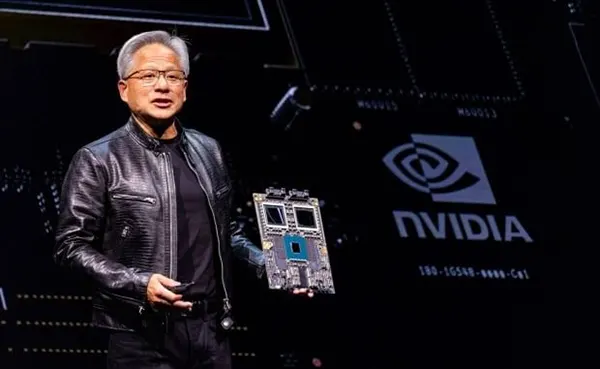
Huang’s public communication style has also influenced the industry. His keynote presentations often outline not just product updates but broader technological directions, shaping expectations across sectors. This ability to define narratives has reinforced NVIDIA’s reputation as a forward-looking company.
NVIDIA’s Role in the Global AI Economy by 2026
By 2026, NVIDIA’s influence extends across nearly every layer of the AI ecosystem. Its GPUs power large-scale data centres used by companies such as Microsoft, Google, and Amazon. These systems are responsible for training and running advanced AI models, including large language models and generative tools widely used in business and research.
The company has also expanded into specialised AI hardware, including the H100 and newer architectures designed specifically for machine learning workloads. These chips deliver significant improvements in performance and energy efficiency, addressing one of the key challenges in AI deployment: the growing cost of computation.
Beyond hardware, NVIDIA now provides complete AI infrastructure solutions. Platforms like NVIDIA DGX and cloud-based AI services enable organisations to deploy models faster and at scale. This integration of hardware and software has positioned the company as a central supplier rather than a component manufacturer.
Challenges and Future Directions
Despite its strong position, NVIDIA faces increasing competition from both established players and new entrants. Companies such as AMD, Intel, and various startups are developing alternative AI accelerators, aiming to reduce reliance on NVIDIA hardware. At the same time, large tech firms are investing in custom chips tailored to their specific needs.
Regulatory pressures also play a growing role. Export restrictions on advanced chips, particularly to certain markets, have already affected NVIDIA’s global operations. Navigating these constraints requires careful strategic planning and diversification of revenue streams.
Looking ahead, NVIDIA is likely to focus on areas such as edge AI, robotics, and digital twins. These domains require not only raw computing power but also sophisticated software integration. If the company continues to execute its long-term strategy effectively, it will remain a defining force in the evolution of artificial intelligence.