
Palmer Luckey and Anduril: How the Oculus Creator Built a $61 Billion Defence Technology Company
Palmer Luckey has managed a rare feat in modern technology: he has helped create major companies in two industries that have almost nothing in common from a customer’s point of view. Oculus helped bring virtual reality into mainstream consumer technology, while Anduril Industries sells autonomous aircraft, surveillance systems, counter-drone equipment and other defence products to governments. The link between the two businesses is Luckey’s approach to building companies. He favours rapid product development, working prototypes and large markets that established companies have struggled to serve quickly. By May 2026, that approach had helped Anduril secure a confirmed valuation of $61 billion after a $5 billion funding round. Reports in July suggested that investors were discussing another round that could value the business at about $100 billion, although Anduril stressed that no decision on such financing had been made. Even without that prospective deal, Luckey’s second major venture had already become one of the most valuable privately held defence technology businesses in the world.
From Oculus to Defence: Palmer Luckey’s Second High-Risk Bet
Luckey’s reputation was established long before Anduril existed. As a young electronics enthusiast, he experimented with virtual reality hardware at a time when modern VR remained expensive, awkward and largely outside the consumer market. He founded Oculus VR in 2012 and became closely associated with the Oculus Rift headset. Interest from developers, investors and the gaming industry grew quickly. In March 2014, Facebook announced an agreement to acquire Oculus for approximately $2 billion, consisting of $400 million in cash and $1.6 billion in Facebook shares, with a possible additional payment linked to performance targets. Luckey was only 21 when the deal was announced.
The Oculus sale gave Luckey financial independence and a reputation as one of Silicon Valley’s most unusual young founders, but his time at Facebook ended only a few years later. He left the company in 2017 after a period that included controversy surrounding his political activities. Instead of returning to consumer electronics or starting another entertainment business, he moved towards national security. That decision led to Anduril Industries, founded in 2017 with a group that combined his hardware background with substantial experience in government technology. Brian Schimpf became chief executive, while Trae Stephens brought experience from Palantir and Founders Fund. Other early figures included Matt Grimm and Joseph Chen, who had previously worked with Luckey at Oculus.
The original Anduril idea was broader than simply creating a better drone. Its founders believed that defence procurement often separated technology development from the speed at which commercial technology companies could design, test and improve products. Anduril therefore adopted a different commercial approach. Instead of waiting for a government customer to finance every stage of a product programme, the company has often invested its own capital in development and then demonstrated working systems to prospective customers. That transfers more early financial risk to the manufacturer, but it can shorten the distance between an idea and equipment that government agencies can actually evaluate.
Why the Oculus Experience Mattered More Than It First Appeared
Virtual reality and defence equipment are clearly different businesses, yet Luckey carried several useful lessons from Oculus into Anduril. Oculus had shown how a relatively small team could combine existing components, original engineering and software into a product that previously required far more expensive equipment. Early Oculus prototypes did not need to solve every possible VR problem. They needed to demonstrate convincingly that affordable immersive virtual reality could work. That ability to turn an ambitious concept into something tangible became important again when Luckey entered a sector where demonstrations and field tests can carry more weight than presentations about future technology.
There was also some overlap in the underlying engineering problems. Virtual reality depends on sensors, cameras, displays, software and rapid processing of information about the physical environment. Modern autonomous defence systems use some of the same broad technology categories, although for entirely different purposes and under far stricter operational requirements. Luckey did not simply convert an Oculus headset into military equipment. The more important connection was his familiarity with building products in which hardware and software had to work together as one system rather than being developed as unrelated components.
His willingness to enter defence was another significant factor. For years, many venture-backed technology companies avoided military work because government sales were considered slow, complicated and politically sensitive. Luckey took the opposite view and made Anduril’s defence mission explicit from the beginning. That gave the company a clearer identity when recruiting engineers who specifically wanted to work on national security projects. It also made Anduril controversial in parts of the technology industry. The controversy did not disappear as the business grew, but the company never had to reposition itself from a civilian technology company into a military contractor after achieving scale.
How Anduril Turned Working Products Into Major Government Business
Anduril’s early work centred on autonomous surveillance. Its Lattice software system could combine information from sensors and help operators identify and track activity across large areas. One of its first prominent applications involved surveillance towers used in US border security programmes. The importance of those projects was commercial as much as technological: Anduril needed to prove that a recently formed venture-backed company could move from demonstration work into government procurement. Over the following years, its ambitions expanded considerably. In 2022, US Special Operations Command selected Anduril for counter-unmanned aircraft work under an agreement with a potential value of nearly $1 billion.
The company subsequently built and acquired a much broader range of products. Its portfolio came to include Ghost reconnaissance drones, ALTIUS aircraft, autonomous underwater vehicles, counter-drone systems, electronic warfare equipment, Barracuda cruise missiles and Fury, the aircraft that developed into Anduril’s YFQ-44A Collaborative Combat Aircraft. Acquisitions helped accelerate this expansion. Anduril bought Area-I, which had developed ALTIUS, and Dive Technologies, a specialist in autonomous underwater vehicles. Rather than treating each acquisition as an isolated business, Anduril has sought to connect different types of equipment through common software and autonomy capabilities.
A particularly important test arrived with the US Air Force’s Collaborative Combat Aircraft programme. Anduril was selected in 2024 as one of the companies involved in developing autonomous aircraft for the programme. Its YFQ-44A subsequently entered flight testing in 2025, with Anduril reporting that the programme had gone from a clean-sheet design to its first semi-autonomous flight in 556 days. The Air Force expanded Anduril’s role again in June 2026 by selecting the company to work on mission autonomy for Collaborative Combat Aircraft. For a business founded less than a decade earlier, participation in a major military aviation programme represented a significant change in status.
Manufacturing, Not Demonstrations, Became the Real Test
Producing successful prototypes is not the same as becoming a major defence supplier. Large military customers need equipment that can be manufactured repeatedly, maintained for years and delivered in substantial quantities. Anduril has therefore spent heavily on industrial capacity rather than remaining primarily an engineering and software business. In January 2025, it selected Ohio for Arsenal-1, a manufacturing site covering about five million square feet. The company has described the project as a nearly $1 billion investment designed to support production of tens of thousands of autonomous defence systems annually when operating at scale.
Arsenal-1 illustrates why Anduril requires unusually large amounts of private capital. Software companies can often add customers without constructing enormous factories, but aircraft, missiles, underwater vehicles and other physical products require production lines, specialist employees, components, testing facilities and supply chains. Anduril is effectively trying to finance parts of that expansion before demand is fully guaranteed. The reward could be substantial if governments order its products at scale, but the strategy also creates considerable execution risk. Factories only become an advantage when the contracts and production volumes justify the investment.
Investors have so far been willing to finance that expansion. Anduril said its revenue more than doubled to approximately $2.2 billion in 2025. In May 2026, the company announced a $5 billion Series H financing led by Thrive Capital and Andreessen Horowitz, giving it a valuation of $61 billion. Only eleven months earlier, its June 2025 funding round had valued it at $30.5 billion. The increase is striking, but a private-company valuation should not be confused with annual revenue, profit or guaranteed future market value. It represents the price investors were prepared to place on the company when purchasing private equity under the terms of that financing.
Why Anduril Became One of Defence Technology’s Most Valuable Private Companies
Anduril’s growth has coincided with a major change in how governments and investors view defence technology. Conflicts in Ukraine and other regions have demonstrated the importance of drones, counter-drone equipment, electronic warfare and the ability to replace equipment quickly. At the same time, strategic competition between the United States and China has increased political pressure to expand military production. Venture investors who once regarded defence as a difficult specialist sector now see a potentially enormous market. The change should not be exaggerated: traditional contractors still receive the overwhelming majority of US defence spending. However, newer companies are receiving opportunities that would have been much harder to obtain a decade earlier.
Anduril has also expanded beyond a dependence on one type of US contract. Australia became an important partner through the Ghost Shark autonomous underwater vehicle programme. In 2026, the Dutch Ministry of Defence awarded Anduril a contract for counter-drone capabilities, while Anduril UK advanced in the British Army’s Project NYX programme involving autonomous aircraft intended to work alongside Apache helicopters. These programmes differ considerably in size and maturity, but together they demonstrate that the company is building relationships with allied defence customers as well as different branches of the US military.
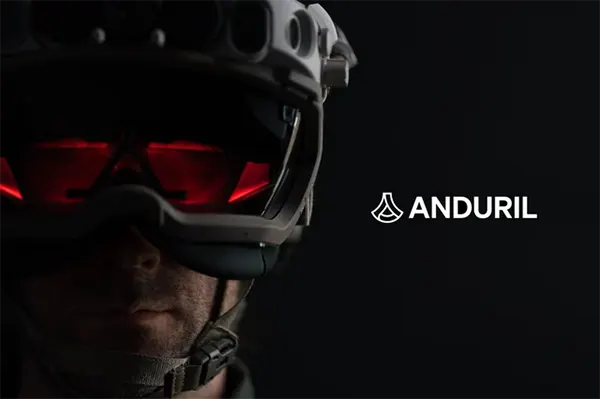
Its increasing involvement in military mixed reality provides an especially unusual link back to Luckey’s first career. In 2025, Anduril and Meta announced that they would work together on extended-reality products for US military users. Anduril had also been working with Microsoft around the US Army’s Integrated Visual Augmentation System, and the Army later awarded Anduril a $159 million initial prototyping contract for Soldier Borne Mission Command, formerly known as IVAS Next. More than a decade after Facebook bought Oculus, technology related to Luckey’s original field had therefore become relevant to his defence business, although the military requirements are considerably different from consumer VR.
What Palmer Luckey’s Second Act Says About Building a Category Leader
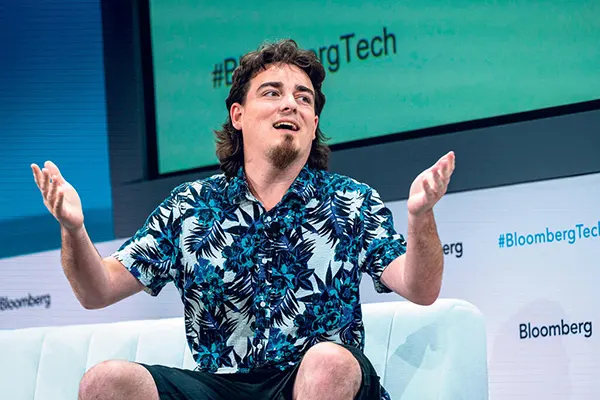
It is important not to treat Anduril as a one-man company. Luckey is its founder and one of its most recognisable public figures, but he is not the chief executive. Brian Schimpf holds that role, and Anduril’s growth has depended on executives, engineers, manufacturing specialists, military veterans and policy experts with experience Luckey did not possess when the company was formed. That division of responsibilities is itself part of the story. Luckey supplied capital, technical instincts, recruiting power and a strong view about the direction of defence technology, while the wider founding team brought experience in government sales, software, operations and national security.
The company’s valuation also needs to be described carefully. The confirmed figure as of August 2026 is $61 billion from the Series H round announced in May. Reports published in July said Anduril was considering another financing that might eventually value it at around $100 billion. Anduril responded that no decisions had been made about future financing and described claims about specific terms, pricing or timing as speculation. A potential $100 billion figure should therefore not be presented as the company’s current valuation. The confirmed $61 billion figure is already sufficient to place Anduril among the most valuable private technology businesses and makes its rise from a 2017 start-up particularly unusual.
What Luckey has built is also more difficult to judge than a conventional consumer technology success. Anduril operates in a sector shaped by government budgets, national security decisions, export rules, long procurement processes and ethical questions surrounding autonomous military systems. Its future value will depend not only on engineering but on whether it can manufacture reliably at the scale it promises and convert development programmes into sustained orders. That makes Anduril a useful example of Luckey’s entrepreneurial method rather than a simple story of uninterrupted success: choose a difficult market that established businesses are serving slowly, build tangible products before every customer requirement is settled, recruit people with expertise the founder does not have, and then invest aggressively when real demand begins to appear.